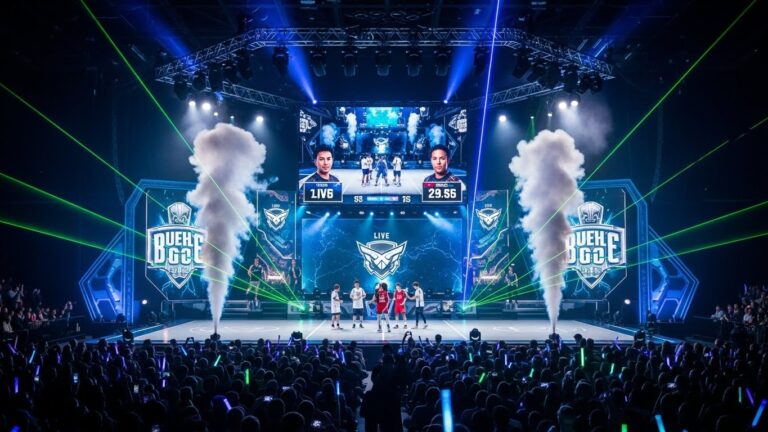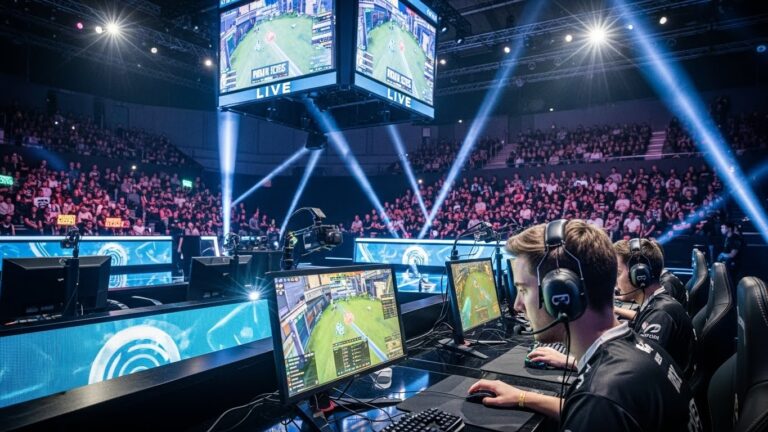





Esports, or electronic sports, has evolved from a niche hobby to a global phenomenon in a remarkably short span of time. Once the domain of competitive gamers and tech enthusiasts, it has now become a massive industry, drawing millions of viewers, professional players, and investors worldwide. This blog post takes a deep dive into the history of esports, its current state, its profound impact on entertainment and culture, and what the future holds for this digital sports revolution.
The Origins of Esports: From Arcade Games to Online Competitions
Early Beginnings: The Birth of Competitive Gaming
The history of esports can be traced back to the late 20th century, long before it became the global spectacle it is today. The roots of competitive gaming lie in the early arcade games of the 1970s and 1980s. Games like Pong and Space Invaders were some of the first to capture the imaginations of players, setting the stage for the future of competitive play.
However, it wasn’t until the early 1990s that video games began to take on a more competitive form. The first notable esports tournament was the Red Annihilation tournament in 1997, held for the game Quake. The tournament drew attention because it was one of the first to feature a large cash prize for its winner, marking a pivotal moment in the history of competitive gaming. John “Fatal1ty”athan, who went on to become a legend in the esports community, won the event.
The Growth of Online Gaming and the Rise of LAN Events
The advent of broadband internet in the late 1990s and early 2000s played a major role in accelerating the growth of esports. As internet connections improved, players were able to compete with one another over long distances, which was a game-changer for esports. No longer did players have to meet in person at arcades or LAN (local area network) centers to compete.
Esports tournaments began to grow in both scale and frequency. Games like StarCraft and Warcraft became the foundation of competitive gaming, and tournaments like The World Cyber Games (WCG) and Electronic Sports World Cup (ESWC) provided a platform for top players from around the world to showcase their skills. These tournaments drew in large crowds, and the idea of esports as a viable career path began to take shape.
The Modern Esports Landscape: A Global Phenomenon
The Emergence of Popular Games and Esports Titles
Over the past two decades, esports has witnessed an explosion of popularity, driven by iconic games that have become the backbone of the competitive scene. Games such as League of Legends, Dota 2, Counter-Strike: Global Offensive, Overwatch, and Fortnite have not only revolutionized the gaming industry but have also created entire ecosystems of professional players, teams, and tournaments.
League of Legends (LoL) and the Rise of MOBAs
Released in 2009 by Riot Games, League of Legends (LoL) quickly rose to prominence and became one of the most influential esports games of all time. As a Multiplayer Online Battle Arena (MOBA) game, LoL’s strategic depth, team-based mechanics, and high skill ceiling made it a perfect fit for competitive play. Its yearly World Championship, with its multi-million-dollar prize pool, attracts millions of viewers each year. The success of LoL set the tone for the rise of MOBA games as a competitive genre, with Dota 2 following in its footsteps and creating one of the largest esports tournaments in the world, The International.
Counter-Strike: Global Offensive and FPS Esports
Another game that has significantly shaped esports is Counter-Strike: Global Offensive (CS: GO). The first Counter-Strike game was released in 1999 as a modification for Half-Life. Over the years, the franchise evolved into a competitive first-person shooter (FPS) that became a staple in the esports scene. CS: GO, released in 2012, solidified its place at the top of FPS esports, boasting some of the most prestigious tournaments, such as ESL Pro League, FACEIT Major, and DreamHack.
Overwatch, Fortnite, and the Evolution of Battle Royale
In addition to MOBA and FPS games, Overwatch and Fortnite have also played a key role in shaping modern esports. Blizzard’s Overwatch, released in 2016, introduced a unique team-based FPS with diverse heroes and distinct abilities. The Overwatch League (OWL) became a major milestone, offering city-based teams, a regular season, and a playoff structure, bringing esports closer to traditional sports in its structure and organization.
Fortnite, developed by Epic Games, introduced the battle royale genre and became a cultural sensation in 2017. Its esports scene, though more casual than others, features massive prize pools and attracts millions of players and viewers, demonstrating the ever-expanding reach of esports to younger and more diverse audiences.
The Impact of Esports on Culture and Entertainment
The Digital Revolution: Esports as a Mainstream Entertainment Medium
One of the most significant aspects of the rise of esports is how it has transformed the entertainment landscape. Traditionally, sports such as football, basketball, and baseball dominated global entertainment. However, the rapid growth of esports has led to it being recognized as a legitimate form of entertainment, with viewership numbers rivaling traditional sports.
In fact, esports viewership continues to soar. Major tournaments regularly attract millions of live viewers, with the 2020 League of Legends World Championship garnering over 3.8 million concurrent viewers. These numbers place esports on par with traditional sports like the NFL and NBA in terms of global audience size.
Esports and Streaming Platforms
The rise of streaming platforms, particularly Twitch, has had a profound effect on esports. Twitch, founded in 2011, became the go-to platform for live-streaming esports events. It provided a space for players to showcase their skills while interacting with fans, creating a new type of connection between viewers and players.
Streaming platforms have also democratized esports by giving aspiring players the ability to build their own fanbases. Today, streamers can achieve celebrity status, with top personalities like Ninja, Shroud, and Pokimane earning millions of dollars from sponsorships, advertisements, and donations.
The Professionalization of Esports: Teams, Coaches, and Sponsorships
As esports has grown in prominence, it has also become increasingly professionalized. The days of players gathering in basements or internet cafes are long gone. Today, esports organizations field entire teams, with professional players, coaches, analysts, and support staff. These organizations operate much like traditional sports teams, with team owners, sponsorship deals, and management structures.
Sponsorships play a significant role in the economics of esports. Companies from various industries, including technology, sportswear, and energy drinks, sponsor players and teams to gain access to the growing esports audience. Additionally, brands like Coca-Cola, Intel, and Nike have ventured into esports partnerships, marking the industry’s increasing mainstream recognition.
The Business of Esports: Economics and Revenue Streams
Revenue Streams in Esports
Esports has proven to be a lucrative industry. Several revenue streams contribute to its financial success:
- Sponsorships and Advertising: As mentioned, sponsorships from major brands are a major source of income for esports teams and tournaments.
- Prize Money: Esports tournaments feature substantial prize pools, with games like Dota 2 offering tens of millions of dollars in prizes.
- Merchandise: Just like traditional sports teams, esports organizations sell merchandise, including jerseys, hats, and other fan gear.
- Media Rights: With the growing viewership of esports, media rights have become an important revenue stream. Streaming platforms like Twitch and YouTube have agreements to broadcast major esports events.
- Crowdfunding: Platforms like Kickstarter and Patreon allow fans to contribute directly to their favorite players or tournaments.
The Role of Investors and Venture Capital
Esports has attracted significant investment from venture capitalists and private equity firms. These investors see esports as a rapidly growing market with untapped potential. They fund esports organizations, tournaments, and platforms to help them scale and grow their audience base.
Venture capital has played a significant role in establishing successful esports franchises, leading to a boom in team and league creation, further professionalizing the ecosystem.
The Future of Esports: Where Is It Heading?
The Growth of Virtual Reality and Augmented Reality in Esports
As technology continues to advance, new possibilities arise for esports. Virtual Reality (VR) and Augmented Reality (AR) are poised to revolutionize the esports landscape. These immersive technologies offer players and viewers a more interactive and engaging experience. VR esports, for example, could bring a level of immersion never before seen in competitive gaming, while AR could enhance the way fans experience live events.
Integration with Traditional Sports
One of the most exciting prospects for the future of esports is its integration with traditional sports. The convergence of esports and physical sports is already happening, with basketball teams, soccer clubs, and even Olympic committees exploring esports partnerships. In the coming years, it is likely that esports will become a permanent fixture in the sporting landscape, with dedicated esports arenas, joint tournaments, and possibly even inclusion in future Olympic Games.
The Expansion of Esports in Emerging Markets
The global expansion of esports is showing no signs of slowing down. Emerging markets in Asia, South America, and Africa are becoming increasingly important in the esports ecosystem. As internet access improves and gaming culture spreads to these regions, new audiences and talent pools will emerge, further fueling the global esports phenomenon.
The Role of AI and Machine Learning in Esports
Artificial Intelligence (AI) and Machine Learning (ML) will play a critical role in the future of esports. AI can be used to analyze player behavior, predict outcomes, and even create new forms of gameplay. These technologies could help players improve their skills by offering personalized coaching, game analysis, and performance tracking.
Conclusion: Esports as a Cultural and Economic Force
The rise of esports has been one of the most remarkable transformations in the entertainment industry over the past two decades. What began as a niche hobby has grown into a global phenomenon, impacting culture, entertainment, and business on a massive scale. With millions of fans, professional players, and investors backing the industry, esports shows no signs of slowing down. As technology continues to evolve, the future of esports promises to be even more exciting, offering new opportunities for players, fans, and stakeholders alike. The digital age has given rise to a new kind of sport, and it is clear that esports is here to stay.