

Introduction
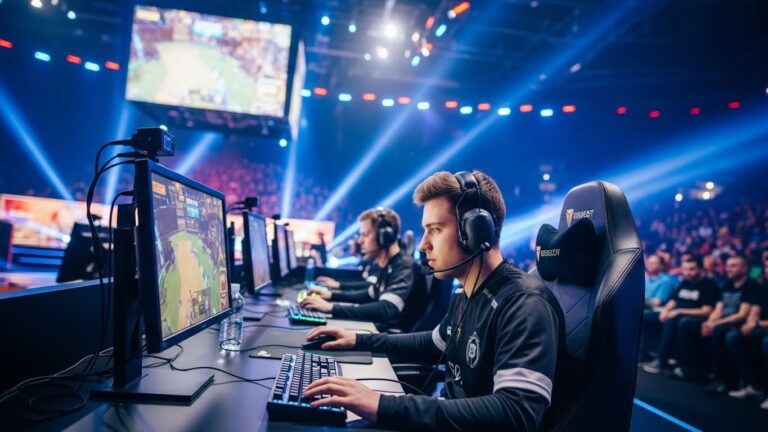
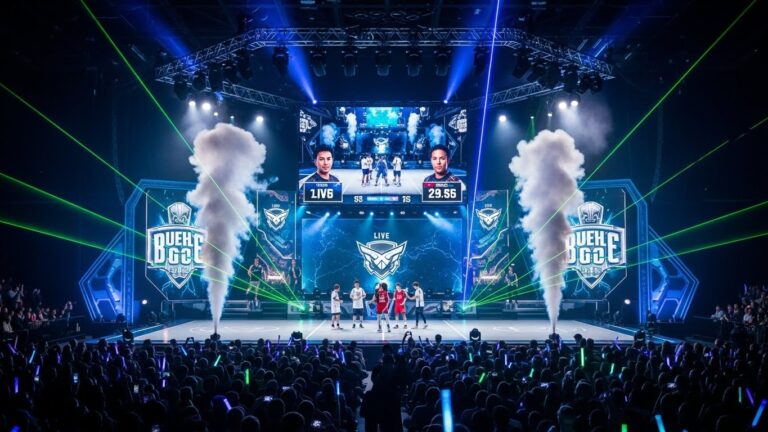
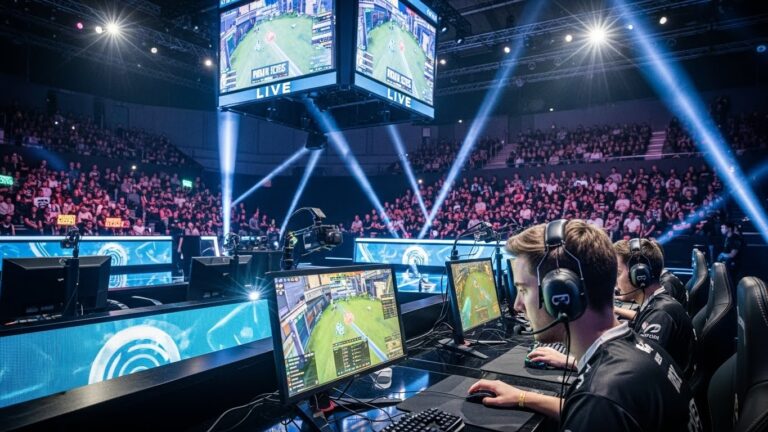
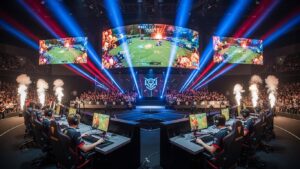
Two decades ago, few would have predicted that video games—once dismissed as mere entertainment—would grow into a multibillion-dollar industry, rivaling traditional sports in viewership, revenue, and cultural influence. Esports, or competitive gaming, has transformed from small local tournaments in smoky internet cafés into packed stadiums, international championships, and streaming spectacles watched by millions around the world.
In this article, we’ll explore how Esports evolved, what drives its popularity, how it impacts society and the economy, and where it’s headed in the future.
The Early Days: When Gaming Met Competition
The roots of Esports can be traced back to the late 1970s and 1980s, when video games first started to gain popularity. The earliest known gaming competition took place in 1972 at Stanford University, where students competed in a game called Spacewar! for a year’s subscription to Rolling Stone magazine.
By the 1980s, arcade games like Pac-Man and Donkey Kong became mainstream, and informal competitions began popping up across the United States. In 1980, Atari organized the Space Invaders Championship, attracting over 10,000 participants—a record at the time. This event laid the groundwork for organized gaming competitions and showed that the concept of competing through video games could capture the public’s imagination.
The 1990s introduced faster internet connections and multiplayer games that allowed players to compete globally. Titles like Doom, Quake, and StarCraft fueled early online competitions. Gaming communities began forming around these titles, marking the start of Esports as we know it today.
The Rise of Esports in the 2000s
The 2000s were a turning point for Esports. Internet connectivity improved worldwide, personal computers became more powerful, and game developers started supporting competitive play.
LAN Parties and Local Tournaments
In the early 2000s, gamers gathered in person for “LAN parties” — local area network sessions where players connected their computers to compete face-to-face. These events built camaraderie and excitement. Popular games of the era like Counter-Strike, Warcraft III, and Unreal Tournament fueled this competitive spirit.
The Emergence of Global Leagues
Soon, global tournaments began to emerge. Events like the World Cyber Games (WCG), the Cyberathlete Professional League (CPL), and Major League Gaming (MLG) formalized Esports into organized leagues with cash prizes and international recognition.
Players began traveling across countries to compete, and professional gaming teams started to form. It was during this time that Esports began transitioning from a hobby to a potential career path for top players.
The Role of South Korea
No discussion about early Esports is complete without mentioning South Korea. Following the Asian financial crisis in the late 1990s, the government invested heavily in broadband infrastructure. As a result, South Korea became a hub for online gaming.
Television networks began broadcasting StarCraft matches, turning gamers into national celebrities. Players like Lim “BoxeR” Yo-Hwan became household names, and Esports stadiums started to appear in Seoul. South Korea effectively laid the foundation for Esports as a professional industry.
Streaming and the Modern Boom
The 2010s marked the true explosion of Esports, thanks to streaming platforms and social media.
Twitch and the Democratization of Esports
When Twitch launched in 2011, it changed everything. Suddenly, anyone could stream their gameplay, build a following, and engage directly with fans. Competitive matches could be broadcast globally without the need for television networks or massive production budgets.
Games like League of Legends, Dota 2, and Counter-Strike: Global Offensive became international phenomena. Riot Games’ League of Legends World Championship attracted millions of viewers, while Valve’s The International offered multi-million-dollar prize pools funded partly by fans.
Streaming gave Esports the visibility it needed to break into the mainstream. Viewership numbers started to rival—and sometimes surpass—those of major sports events.
Popular Esports Titles and Their Impact
League of Legends
Since its release in 2009, League of Legends has been one of the most influential Esports titles. Riot Games built an ecosystem with regional leagues, a global championship, and a clear pathway for players to turn professional.
The game’s structure mirrors that of traditional sports, with franchised teams, coaches, and analysts. The World Championship attracts millions of viewers every year and has turned players like Faker into global icons.
Dota 2
Valve’s Dota 2 is another cornerstone of modern Esports. Known for its complexity and depth, it rewards strategic thinking and teamwork. What truly sets it apart is The International, an annual tournament with prize pools exceeding tens of millions of dollars, largely crowdfunded through in-game purchases.
This community-driven approach redefined how Esports tournaments could be funded and built loyalty among fans.
Counter-Strike: Global Offensive
Few games have the longevity of Counter-Strike. From its early days as a Half-Life mod to the polished version we know today, CS:GO has maintained a dedicated following. Its simple but high-skill gameplay—where every round can swing momentum—makes it thrilling to watch.
Events like the ESL One and PGL Majors have cemented Counter-Strike as one of the pillars of competitive gaming.
Battle Royale and Mobile Titles
In recent years, games like Fortnite, PUBG, and Call of Duty: Warzone have brought Esports to new audiences. Fortnite in particular blurred the lines between entertainment and competition, mixing concerts, story events, and competitive play into a single experience.
Meanwhile, mobile Esports—especially in regions like Southeast Asia and India—has exploded. Titles like Mobile Legends, Free Fire, and PUBG Mobile have created new communities and made competitive gaming accessible to millions who may not own gaming PCs or consoles.
The Professional Scene: Teams, Players, and Organizations
The Esports ecosystem today is vast and structured.
Teams and Franchises
Professional teams operate much like traditional sports clubs. They scout and sign players, hire coaches, and manage branding and sponsorship deals. Organizations like Team Liquid, Cloud9, and T1 have built global reputations across multiple games.
These teams aren’t just competing—they’re creating content, running academies, and expanding into entertainment and merchandise.
Player Lifestyle and Training
Gone are the days when professional gamers played casually from their bedrooms. Modern Esports athletes follow rigorous training schedules, often practicing eight to twelve hours a day. They analyze gameplay footage, study opponents, and work with nutritionists and sports psychologists.
This shift reflects the professionalization of the industry, though it also raises concerns about burnout and mental health.
Coaching and Analytics
Like traditional sports, Esports teams now rely heavily on data analytics. Coaches use advanced tools to track player performance, reaction times, and in-game decisions. This analytical approach has elevated competition to new levels, making matches more strategic and precise.
The Business of Esports
Esports is no longer just about competition—it’s big business.
Sponsorships and Advertising
Brands from all industries have jumped into Esports sponsorships. Companies like Intel, Red Bull, and Mercedes-Benz see value in reaching younger, tech-savvy audiences. Advertising isn’t limited to logos on jerseys; it’s integrated into broadcasts, social media, and in-game content.
Media Rights and Broadcasting
As viewership grows, so does demand for broadcasting rights. Platforms like YouTube Gaming and Twitch compete to host major tournaments. Some events are even aired on traditional television networks, signaling mainstream acceptance.
Merchandise and Event Revenue
Esports organizations have diversified revenue through merchandise, ticket sales, and exclusive collaborations. Major tournaments fill arenas like Madison Square Garden and Staples Center, with fans paying to experience live matches, meet players, and join fan expos.
Prize Pools and Player Salaries
Prize pools can reach astonishing figures. Top-tier tournaments like The International have exceeded $30 million in total rewards. Professional players earn salaries comparable to athletes in traditional sports, supplemented by sponsorships, streaming income, and appearance fees.
The Cultural Impact of Esports
Changing Perceptions of Gaming
For years, gaming was dismissed as a waste of time. Esports has changed that narrative. It’s now seen as a legitimate career path, a display of skill and strategy, and a unifying form of entertainment.
Parents and educators are beginning to recognize that gaming can foster teamwork, problem-solving, and communication skills.
Esports in Education
Universities around the world now offer Esports scholarships, and high schools have started forming competitive gaming teams. This integration into academia reflects how deeply Esports has permeated modern culture.
Global Community and Diversity
Esports transcends borders. A player in Brazil can compete against someone in Japan, while fans from different continents unite online to support their favorite teams. It’s one of the few spaces where people of different languages and backgrounds connect through shared passion.
Diversity within the community is also growing. Female players, streamers, and commentators are breaking barriers, though there’s still work to be done to ensure inclusivity and equal opportunity.
Challenges Facing the Esports Industry
Despite its success, Esports faces significant challenges that could shape its future.
Player Health and Burnout
The intense training schedules and competitive pressure can lead to mental and physical exhaustion. Many players retire young due to burnout. Organizations are beginning to address this with better support systems, but it remains a concern.
Regulation and Fair Play
As Esports expands, maintaining fair competition becomes crucial. Issues like cheating, match-fixing, and performance-enhancing software can damage credibility. Esports governing bodies are emerging to set standards, but consistent global regulation is still lacking.
Monetization and Sustainability
While top-tier events attract huge investments, smaller tournaments often struggle to remain profitable. Balancing the financial side of Esports with accessibility for players and fans is a constant challenge.
Representation and Inclusion
Although progress is being made, the industry still faces issues of gender imbalance and discrimination. Encouraging diversity at all levels—from players to executives—will be key to long-term growth.
The Future of Esports
The future looks promising. Analysts project that Esports revenue will continue to grow rapidly, surpassing several traditional sports in global audience size.
Integration with Technology
Advancements in virtual reality, augmented reality, and artificial intelligence could reshape how games are played and viewed. Imagine VR tournaments where players compete in immersive digital arenas, or AI-driven analytics that predict match outcomes in real time.
Mainstream Recognition
Esports is steadily gaining recognition from traditional institutions. The International Olympic Committee has already acknowledged Esports as a potential future Olympic event, and exhibition matches have been held alongside global sports competitions.
Expansion into New Markets
Emerging regions such as Africa, the Middle East, and Latin America are becoming hotspots for Esports growth. Improved internet access and affordable devices are creating new audiences and talent pools.
Crossovers with Entertainment
The line between gaming and entertainment continues to blur. We’ve already seen in-game concerts, celebrity collaborations, and movie adaptations of popular Esports titles. This trend will only deepen as Esports becomes a staple of pop culture.
Why Esports Matters
Esports represents more than just competition—it reflects a generational shift in how we consume entertainment, interact online, and define achievement. It’s a space where creativity meets skill, where technology fuels connection, and where young people around the world can dream of making it big on a global stage.
It’s also a reminder that human competition evolves with the times. Just as past generations cheered for athletes on fields and courts, today’s fans rally behind digital gladiators who master the art of pixels and precision.
Conclusion
Esports has come a long way from college basements and arcade halls to world-class arenas and massive digital platforms. It’s a movement powered by community, innovation, and passion.
As technology continues to advance and new audiences join the fold, Esports will only grow stronger—bridging cultures, inspiring careers, and reshaping what it means to compete in the 21st century.
It’s not just about gaming anymore; it’s about ambition, connection, and the future of global entertainment.