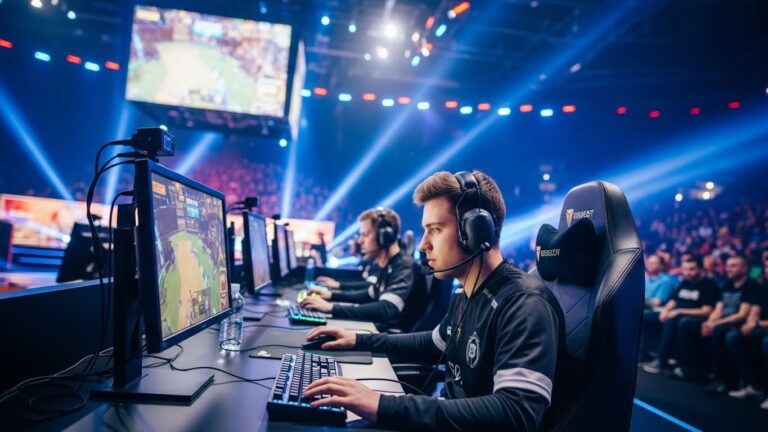




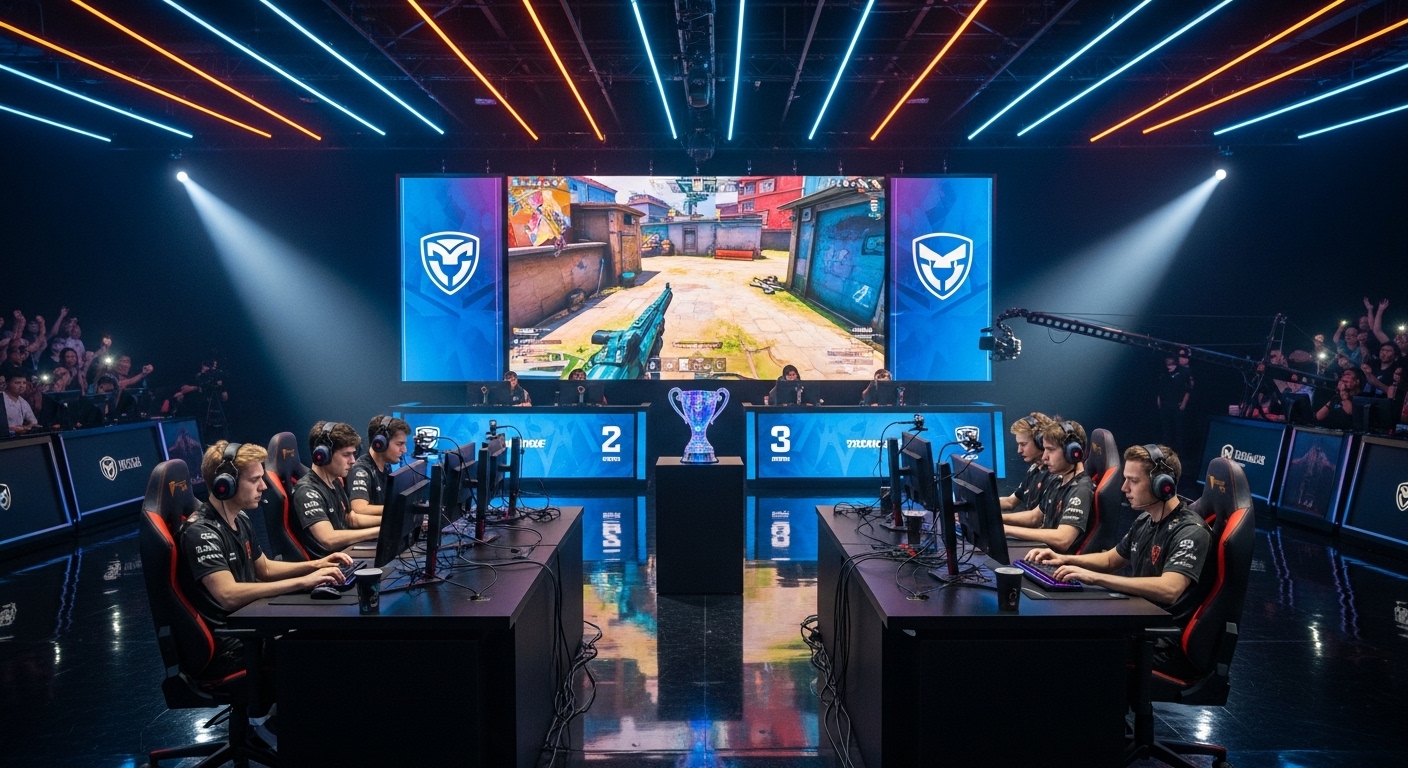
In the span of just a few decades, esports has gone from being a niche hobby to a global entertainment powerhouse. What once started as a pastime for gamers, held in basements or local LAN (Local Area Network) parties, has now evolved into a multi-billion-dollar industry that captivates millions around the world. Esports, short for electronic sports, has become more than just a competition; it has become a lifestyle, a career for many, and a cultural movement. In this blog post, we will explore the rise of esports, its impact on the entertainment industry, and why it continues to attract millions of viewers, sponsors, and players.
The Evolution of Esports: From Casual to Competitive
The history of esports can be traced back to the early days of gaming when the first video games were released in the 1970s and 1980s. However, it wasn’t until the 1990s that competitive gaming began to take shape. The rise of multiplayer games, particularly first-person shooters like Doom and Quake, laid the foundation for what would later become a competitive gaming scene.
In the 1990s, LAN parties became a popular way for gamers to compete with each other in person. These events, often informal, helped foster a sense of community among gamers. The first recognized esports tournaments began to emerge in the late 1990s and early 2000s. One of the most significant early events was the Red Annihilation tournament in 1997, which took place for the game Quake and offered a Ferrari as the grand prize. Though relatively small in scope by today’s standards, this tournament marked an important milestone in the development of competitive gaming.
The turn of the millennium saw the rapid rise of organized competitive gaming, with major tournaments being held for games such as StarCraft, Warcraft III, and Counter-Strike. These early competitions helped define the structure of modern esports, introducing elements like professional teams, sponsorships, and live-streamed events.
The Globalization of Esports: A Billion-Dollar Industry
In the 2010s, esports took a massive leap forward in terms of both popularity and revenue. One of the key events that marked this turning point was the launch of League of Legends in 2009. Developed by Riot Games, League of Legends (LoL) became a cornerstone of the esports industry, with its annual World Championship growing into one of the largest esports tournaments globally. By 2013, LoL was regularly drawing millions of viewers, and the prize pools for the tournament were reaching multi-million-dollar figures.
The success of League of Legends was not an isolated case. Other major games, such as Dota 2, Counter-Strike: Global Offensive, and Overwatch, also grew exponentially in terms of their esports presence. In 2018, The International, the world’s premier Dota 2 tournament, had a prize pool of over $25 million, setting a new standard for competitive gaming. This growth was fueled by a combination of factors, including high-profile sponsorships, partnerships with major media networks, and the increasing use of streaming platforms such as Twitch.
Esports has not only become a popular form of entertainment but also a legitimate business. The industry’s revenue comes from a variety of sources, including sponsorships, merchandise sales, ticket sales for live events, media rights, and, of course, prize money. Major companies from outside the gaming world—such as Intel, Coca-Cola, and Mercedes-Benz—have recognized the commercial potential of esports and have invested heavily in sponsorship deals with teams, players, and events.
As of 2023, the global esports industry is valued at over $1 billion and continues to grow at a rapid pace. The increasing popularity of esports has also led to the establishment of dedicated esports arenas, with purpose-built venues like the Blizzard Arena in Los Angeles and the HyperX Esports Arena in Las Vegas. These venues host live events and provide a physical space for fans to experience the excitement of esports in person.
Esports as a Career: Professional Players and Teams
With the exponential growth of the esports industry, gaming has evolved from a hobby to a legitimate career. Professional players now compete full-time, with many earning six-figure salaries from sponsorships, tournament winnings, and streaming revenue. Some of the highest-paid players in esports, such as Dota 2‘s Kuro “KuroKy” Takhasomi and Fortnite‘s Kyle “Bugha” Giersdorf, have amassed fortunes from their success in competitive gaming.
Esports organizations have also grown into multi-million-dollar businesses. Teams like Team Liquid, Cloud9, FaZe Clan, and T1 operate much like traditional sports franchises, employing players, coaches, analysts, and other staff members to compete at the highest level. These organizations are often backed by investors and sponsors, and many field teams in multiple games. For example, Cloud9 has teams competing in League of Legends, Valorant, Counter-Strike, and other titles.
Professional esports players and teams train intensively, often practicing for eight or more hours a day. Success in esports requires more than just natural talent; it demands a high level of strategy, teamwork, communication, and mental fortitude. Players and coaches analyze gameplay footage, fine-tune strategies, and study their opponents to gain a competitive edge. It’s not just about playing the game—it’s about mastering it.
Moreover, esports has created new career paths outside of the players themselves. Coaches, analysts, managers, and even content creators play a significant role in the success of professional teams. This ecosystem has also given rise to broadcasters, commentators, and streamers who make a living by covering esports events, providing analysis, and entertaining fans.
Streaming Platforms and Their Impact on Esports
One of the most significant drivers of esports’ growth has been the rise of live-streaming platforms like Twitch, YouTube Gaming, and Facebook Gaming. These platforms have not only provided a space for casual gamers to share their content but have also been essential in bringing esports to a global audience.
Twitch, in particular, has become the go-to platform for esports broadcasts, hosting live streams of tournaments, as well as daily streams from professional players and content creators. The interaction between streamers and viewers is one of the defining features of platforms like Twitch, creating a sense of community around esports. Fans can follow their favorite players, engage with them in real-time, and even donate or subscribe to support their content.
Streaming platforms have also made it possible for esports fans to watch events live, from the comfort of their own homes. Tournaments that were once confined to physical arenas or television broadcasts are now easily accessible to anyone with an internet connection. The ability to watch tournaments live and for free has allowed esports to attract a much larger, more diverse audience than traditional sports, where access to events often comes at a premium.
The accessibility of esports through streaming has also led to the rise of “esports influencers”—streamers and content creators who build personal brands around their gaming skills. Many of these influencers have gone on to sign sponsorship deals, create content for major brands, and even launch their own esports teams.
The Growing Popularity of Esports Events
Esports has evolved into a spectator sport in its own right, with major tournaments now attracting millions of viewers both online and in person. The biggest esports events are held in arenas that are capable of hosting thousands of fans, and these events are often broadcasted to a global audience. One of the most famous esports tournaments is the League of Legends World Championship, which regularly draws viewership numbers on par with traditional sports events like the Super Bowl and the FIFA World Cup.
Esports events are known for their intense competition, high stakes, and the dramatic storylines that unfold over the course of a tournament. Teams are often seen as representing their countries or regions, which fuels a sense of national pride and identity among fans. The stakes are high, and the drama is palpable. But beyond the competition itself, these events also offer a unique form of entertainment. Much like traditional sports, esports events feature commentators, analysis, and hype-building that keep fans on the edge of their seats.
Esports tournaments are also increasingly being held in mainstream venues, such as arenas and stadiums. Major events, such as The International and League of Legends World Championship, are held in huge venues that are designed to accommodate large live audiences. The electrifying atmosphere at these events, combined with the thrill of competition, makes for an experience unlike any other.
Esports and its Cultural Impact
Esports has become a defining part of contemporary pop culture. It has influenced fashion, music, and entertainment, with esports stars appearing in commercials, interviews, and even mainstream TV shows. Games like Fortnite and League of Legends have become global phenomena, shaping trends in gaming and beyond.
The rise of esports has also made gaming more socially accepted. Once seen as an activity for introverted individuals or outcasts, gaming has now become mainstream, with players from all walks of life participating in or watching esports events. Esports has created a space where gamers from different countries, cultures, and backgrounds can come together, united by their love of competition and gaming.
Furthermore, esports has sparked important conversations around topics like mental health, gender inclusion, and diversity. The esports community has become increasingly vocal about the need for more representation, fair treatment of women, and the importance of mental well-being for players. As esports continues to grow, these discussions are likely to play an even more significant role in shaping the industry’s future.