



Introduction
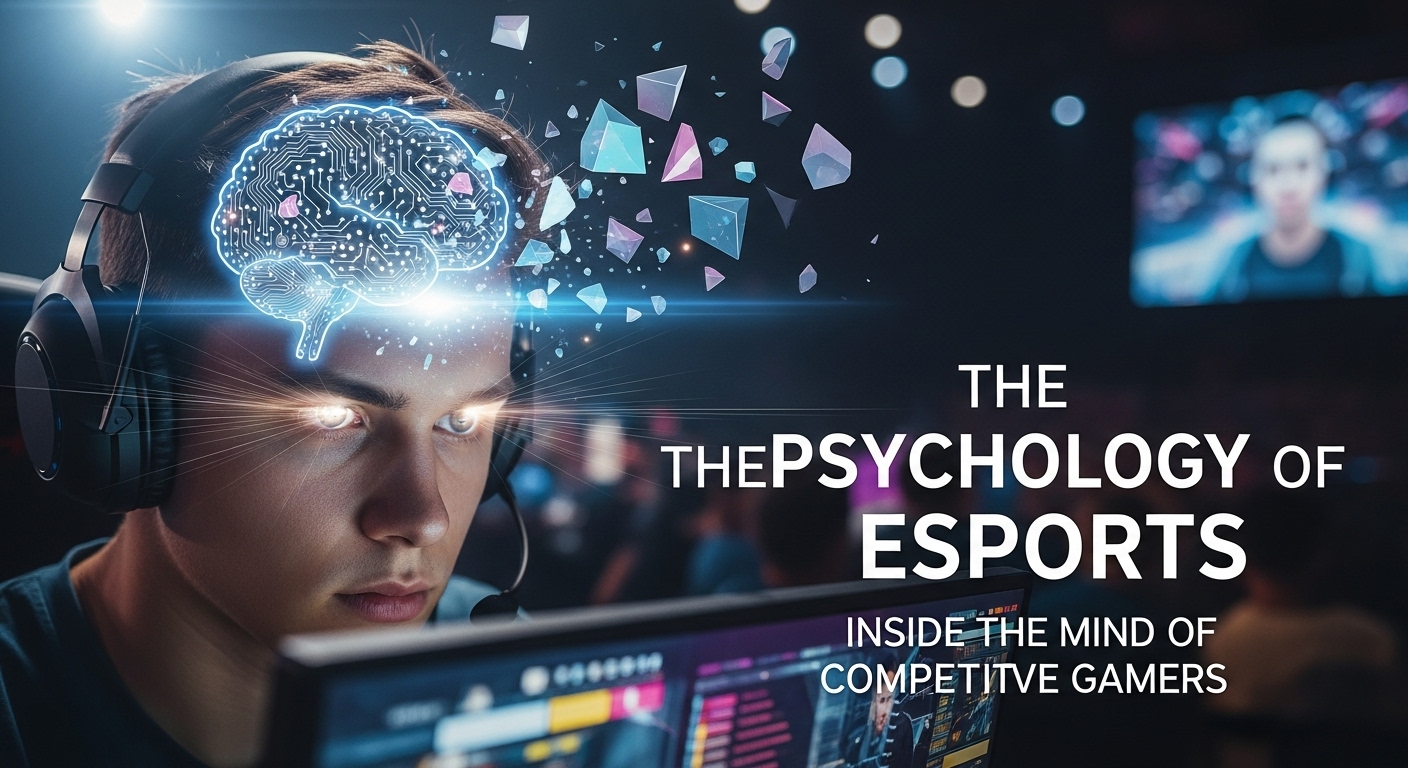
Behind every victory in esports lies not just skill, but also psychology. Competitive gaming requires mental toughness, focus, resilience, and emotional control. Just like athletes train their bodies, esports players must train their minds. Understanding the psychology of esports gives us insight into why some players rise to greatness while others struggle.
The Importance of Mental Skills in Esports
Focus and Concentration
Matches can last for hours, requiring sustained focus. A single lapse in concentration can cost the game. Pro players practice mindfulness and mental exercises to improve attention.
Decision-Making Under Pressure
Esports requires split-second decisions. Whether to engage in a team fight or retreat depends on reading complex situations in milliseconds. Players train their brains to handle stress and process information quickly.
Confidence
Confidence separates winners from losers. Doubt can lead to hesitation, while confidence encourages decisive plays. Coaches and psychologists work with players to build self-belief.
The Role of Stress and Pressure
Esports players face enormous pressure. Millions may be watching online, prize pools are massive, and careers depend on performance. Stress management techniques include:
- Breathing exercises
- Visualization
- Routine building
- Talking with team psychologists
Burnout and Mental Health
Esports careers are intense. Players often train 10–12 hours a day, leading to burnout. The repetitive nature of practice combined with constant competition can cause fatigue, depression, and anxiety. Organizations now employ mental health professionals to support players.
The Psychology of Team Dynamics
Esports is often team-based, meaning group psychology matters. Key elements include:
- Communication styles – how teammates share info under pressure.
- Conflict resolution – preventing disputes from damaging performance.
- Trust – believing teammates will execute their roles.
Flow State in Esports
The “flow state” is when players are fully immersed, losing sense of time and self, performing at peak potential. Many esports pros describe this during intense matches. Achieving flow requires practice, confidence, and focus.
The Role of Fans and Public Perception
Fans add pressure but also motivation. Positive energy can boost performance, while negative comments and online harassment can hurt players’ confidence. Mental toughness helps players filter distractions.
Psychology of Winning and Losing
Winning brings confidence, momentum, and motivation. Losing teaches resilience but can also trigger frustration or doubt. The best players learn to treat losses as lessons, developing a growth mindset.
The Future of Esports Psychology
Expect to see:
- More professional psychologists embedded in teams.
- Mental training programs similar to physical fitness regimes.
- Apps and AI tools to monitor stress, focus, and performance.
Conclusion
Esports is as much about the mind as it is about the game. Focus, confidence, stress management, and resilience define success. By understanding the psychology of esports, we recognize players not just as gamers, but as mental athletes pushing human limits.