



Introduction
Esports has undergone a transformation in the last two decades, evolving from a subculture within the gaming community to a global entertainment powerhouse. Competitive gaming, which once existed solely in the realm of casual tournaments and small fan bases, now garners millions of viewers, sponsors, and professional organizations. Esports tournaments, held in massive arenas or streamed to millions online, have become cultural events, attracting fans across the globe. This blog explores the rise of esports, its role in modern entertainment, and its long-term impact on the world of sports and competition.
The Early Days of Esports: A Subculture Born in Arcades
The concept of competitive gaming is far from new. In fact, some of the earliest forms of esports can be traced back to arcade gaming in the 1980s. In the early days of video games, competitive gaming took place in arcades, with titles like “Space Invaders” and “Pong” offering casual contests. These arcade machines were the birthplace of many competitive games, but it was the dawn of the internet that allowed the esports scene to truly grow.
By the late 1990s, the online multiplayer game “Quake” had emerged as one of the first major esports titles. This first-person shooter (FPS) allowed players to compete head-to-head over local networks, giving birth to the idea of organized tournaments. It was in the 1997 Red Annihilation tournament, a competition for “Quake,” that the first real glimpse of esports as we know it today appeared. It was here that the first notable esports player, Dennis “Thresh” Fong, won and secured both fame and a professional career. At this time, esports remained niche, with only a small but passionate following.
The Internet Age: The Expansion of Esports Competitions
The true acceleration of esports came with the widespread adoption of the internet. As broadband connections improved and high-speed internet became available to the masses in the early 2000s, competitive gaming flourished. Games like “StarCraft,” “Warcraft III,” and “Counter-Strike” introduced more intricate gameplay and larger-scale tournaments that required skill, strategy, and coordination.
“StarCraft,” released in 1998, became particularly popular in South Korea, where esports began to be taken seriously as a form of professional entertainment. The South Korean government, recognizing the potential for economic and cultural growth, even invested in esports infrastructure, building arenas dedicated solely to gaming. As the popularity of online gaming grew, streaming platforms like Twitch, founded in 2011, began to provide an easy way for fans to watch live gameplay. This marked the beginning of esports’ global appeal, as viewers could now tune in from anywhere in the world to watch professional gamers compete.
By 2013, esports had become a massive industry with major international tournaments drawing in millions of viewers. Games like “League of Legends” and “Dota 2” were leading the way, with large prize pools and international competitions. The annual “League of Legends World Championship,” for instance, now attracts more viewers than many traditional sports events, with millions of people tuning in to watch their favorite teams battle it out for glory.
The Growth of Esports: A Multibillion-Dollar Industry
Today, esports is not just a hobby or a pastime, but a legitimate, multi-billion-dollar industry. According to Newzoo, a global leader in games and esports analytics, the esports industry was projected to generate more than $1.5 billion in revenue in 2023, with growth driven by sponsorship deals, media rights, advertising, and merchandise. Esports is no longer just about the game itself; it has expanded into a fully-fledged entertainment sector, complete with teams, organizations, media coverage, and professional careers.
One of the driving forces behind this financial growth is the rise of esports organizations. Teams like Team Liquid, Cloud9, and Fnatic are now global brands, competing in leagues across multiple games and securing lucrative sponsorships from major corporations. These organizations offer their players salaries, coaches, analysts, and support staff—mirroring the structure of traditional sports teams. At the same time, major companies, including Red Bull, Intel, Coca-Cola, and Nike, have partnered with esports, providing sponsorships that boost the industry’s profile.
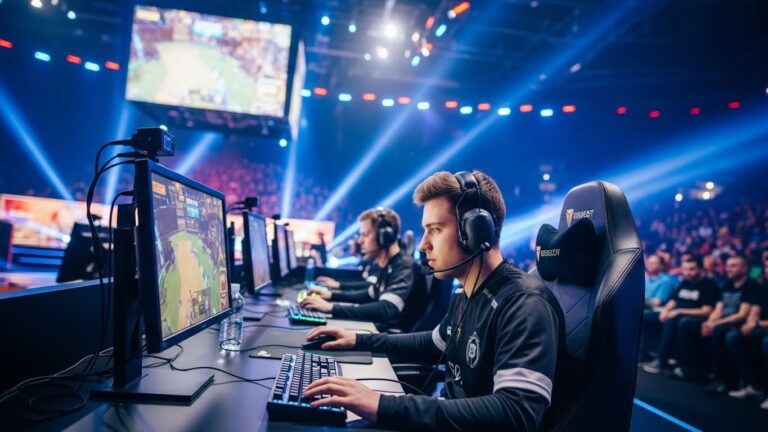
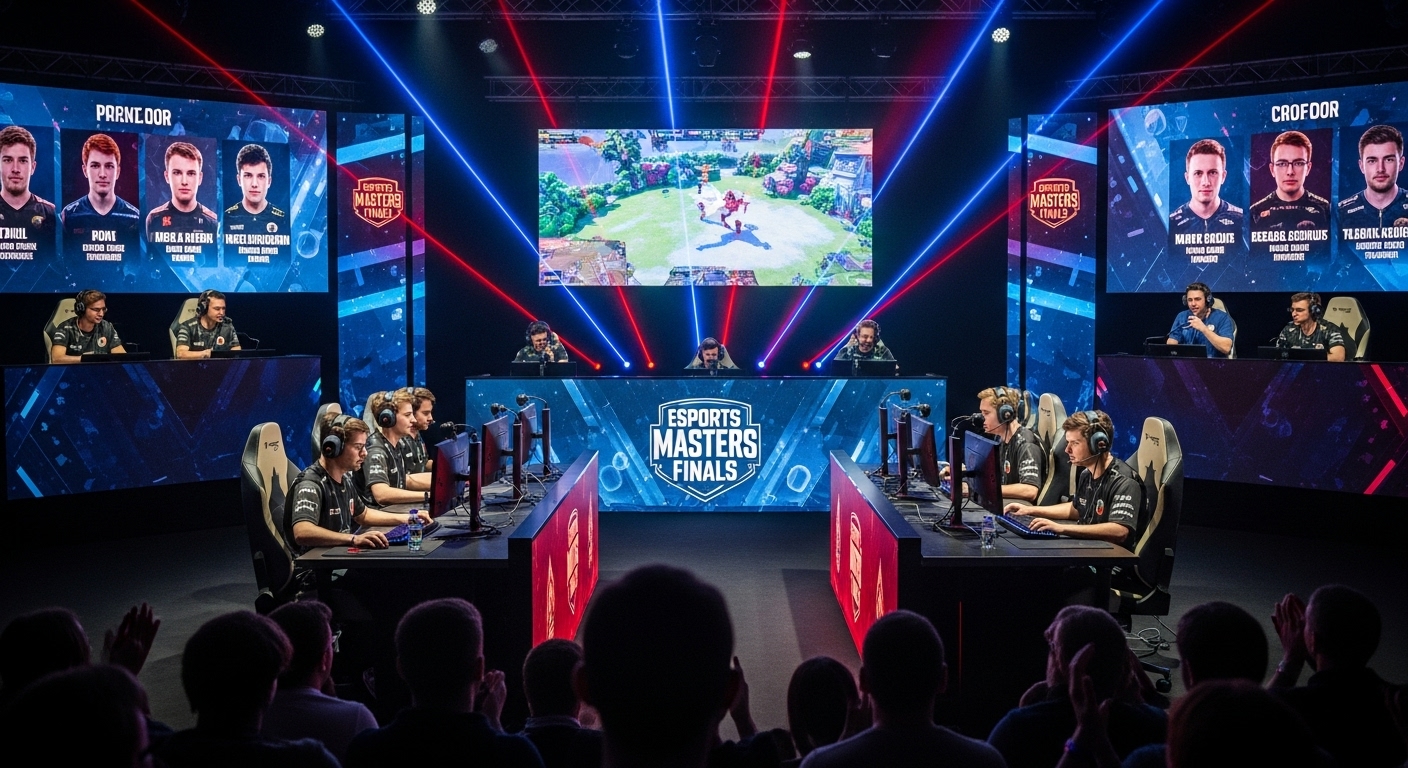
Esports tournaments have also grown significantly in size and scale. While early competitions were held in small venues, today’s premier events take place in massive stadiums, with audiences of thousands in attendance. Tournaments like “The International,” which focuses on the game “Dota 2,” regularly offer prize pools of over $30 million, drawing international competitors and viewers. The prize money for these tournaments has skyrocketed, and as esports continues to gain traction, prize pools are expected to keep growing, making the professional gaming scene increasingly lucrative.
The Power of Streaming and the Role of Platforms
Streaming platforms such as Twitch, YouTube Gaming, and Facebook Gaming have played a pivotal role in the rise of esports. These platforms provide a way for gamers and fans to interact, fostering a sense of community and providing a direct avenue for watching tournaments. Esports competitions are often broadcast live on these platforms, where viewers can not only watch their favorite players but also engage with them in real time via live chat and social media.
Twitch, founded in 2011, is the largest streaming platform for esports content, with millions of active users watching everything from live competitions to casual gameplay. The platform has helped propel esports into the mainstream, and many professional players have leveraged Twitch to build massive followings. Streamers, like Ninja, Shroud, and Pokimane, have become celebrities in their own right, attracting sponsorship deals and even mainstream media attention.
Esports streaming has helped esports reach a broader demographic than traditional sports. According to a study by PwC, the average esports viewer is typically between the ages of 18-34, with a strong skew toward the millennial and Gen Z generations. This demographic is highly tech-savvy, and many prefer streaming digital content rather than watching traditional TV or attending live events. The growth of streaming is not only beneficial for viewers but has also created career opportunities for content creators, esports analysts, and casters, further fueling the industry’s expansion.
The Rise of Professional Esports Athletes
One of the most significant changes esports has brought about is the emergence of professional esports athletes. Unlike traditional sports, where athletes typically start training at a young age and develop over many years, esports players can achieve professional status relatively quickly if they have the skills. In some cases, players can be signed to a professional team as young as 16 or 17.
Professional esports athletes undergo rigorous training, often spending upwards of 8-12 hours a day practicing and perfecting their strategies. While physical fitness may not be as central to esports as it is in traditional sports, players still need excellent hand-eye coordination, reaction times, and mental agility. As a result, many esports players follow strict mental health regimens, including therapy and stress management, to ensure they are at peak performance both in and out of the game.
Esports athletes are now celebrated like traditional sports stars. Famous esports players, like Faker (Lee Sang-hyeok) from “League of Legends,” have become household names, with huge followings and significant sponsorships. The rise of esports has also created a pathway for gamers to turn their passion into a profession, with prize money, streaming income, and brand endorsements providing financial incentives.
The Social and Cultural Impact of Esports
Esports has not only revolutionized the gaming world but has also had a significant impact on broader society and culture. As esports has become more mainstream, it has helped challenge the stereotypes of gaming as a solitary or antisocial activity. The rise of esports has turned gaming into a community-driven, social experience that connects people across the world.
Esports has also become a powerful platform for diversity and inclusion. Many gaming events have taken steps to include women and minority groups, promoting more balanced representation within the industry. Female esports players, in particular, have gained visibility in recent years, with players like “Scarlett” from “StarCraft II” and “Sasha ‘Sasha’ Anastasija” in “Rainbow Six Siege” showing that women can compete at the highest level of esports.
The increasing mainstream acceptance of esports has also led to it being included in international multi-sport events, such as the Asian Games. While esports is not yet recognized as an Olympic sport, its inclusion in major international competitions is a sign of the growing legitimacy and recognition of esports on the global stage.
Esports in Education: A New Path for Aspiring Gamers
As esports has grown, so has its impact on education. Many universities and colleges around the world now offer esports programs and scholarships, allowing students to pursue careers in competitive gaming, game development, and esports management. These programs often provide a structured environment for students to hone their skills while earning a degree.
In addition to competitive programs, esports has become a valuable educational tool. Games that require strategy, critical thinking, and teamwork can help develop problem-solving and collaboration skills. Some schools have even integrated esports into their curriculums as a way to engage students in new and innovative ways.
The Future of Esports
The future of esports looks incredibly promising. With continued advancements in technology, esports is expected to become even more immersive and engaging. Virtual reality (VR) and augmented reality (AR) are already making their way into gaming, and these technologies will likely have a significant impact on esports competitions, offering fans new ways to experience their favorite games and tournaments.
Furthermore, the financial prospects for esports are expected to grow, with more brands, sponsors, and media outlets getting involved. The increasing popularity of mobile esports is also opening up new opportunities for players and fans alike, especially in regions where access to high-end gaming PCs and consoles may be limited.